The Art
THE ART OF FINDING BALANCE
FIND YOUR CENTRE
Balance begins with understanding where your movement comes from.
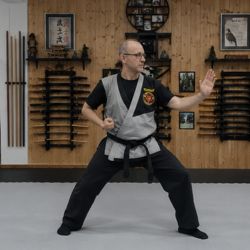
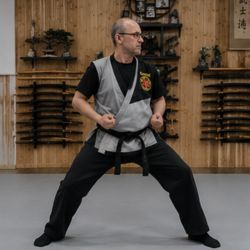
In Kamaejutsu, we place particular attention on the pelvis, hips and legs. Together they form the functional centre from which we organise posture, transfer weight and initiate movement. When this foundation changes, the position and balance of the entire body changes with it.
This is why we do not begin by trying to perfect the visible shape of a kamae. We first learn to recognise where our weight is, how it is supported and what happens to our balance when the body begins to move.
The objective is not simply to become stable while standing still. It is to develop a centre that allows the body to remain organised and balanced while weight, direction and posture are continuously changing.
- Centre — Organise movement from the pelvis and hips
- Connection — Connect the centre through the legs to the ground
- Balance — Maintain stability as weight and position change
THE CONNECTED BODY
The body does not move as a collection of separate parts.
A change in tension, position or load in one area influences the way the rest of the body organises itself. This interconnected relationship is often described through the concept of tensegrity: stability emerges from the way tension and structure work together throughout the whole system.
In Kamaejutsu, this helps us understand why balance cannot be corrected by looking at one joint or one posture in isolation. A change at the feet, knees or hips can continue through the entire body — and a restriction elsewhere can influence the way we stand and move.
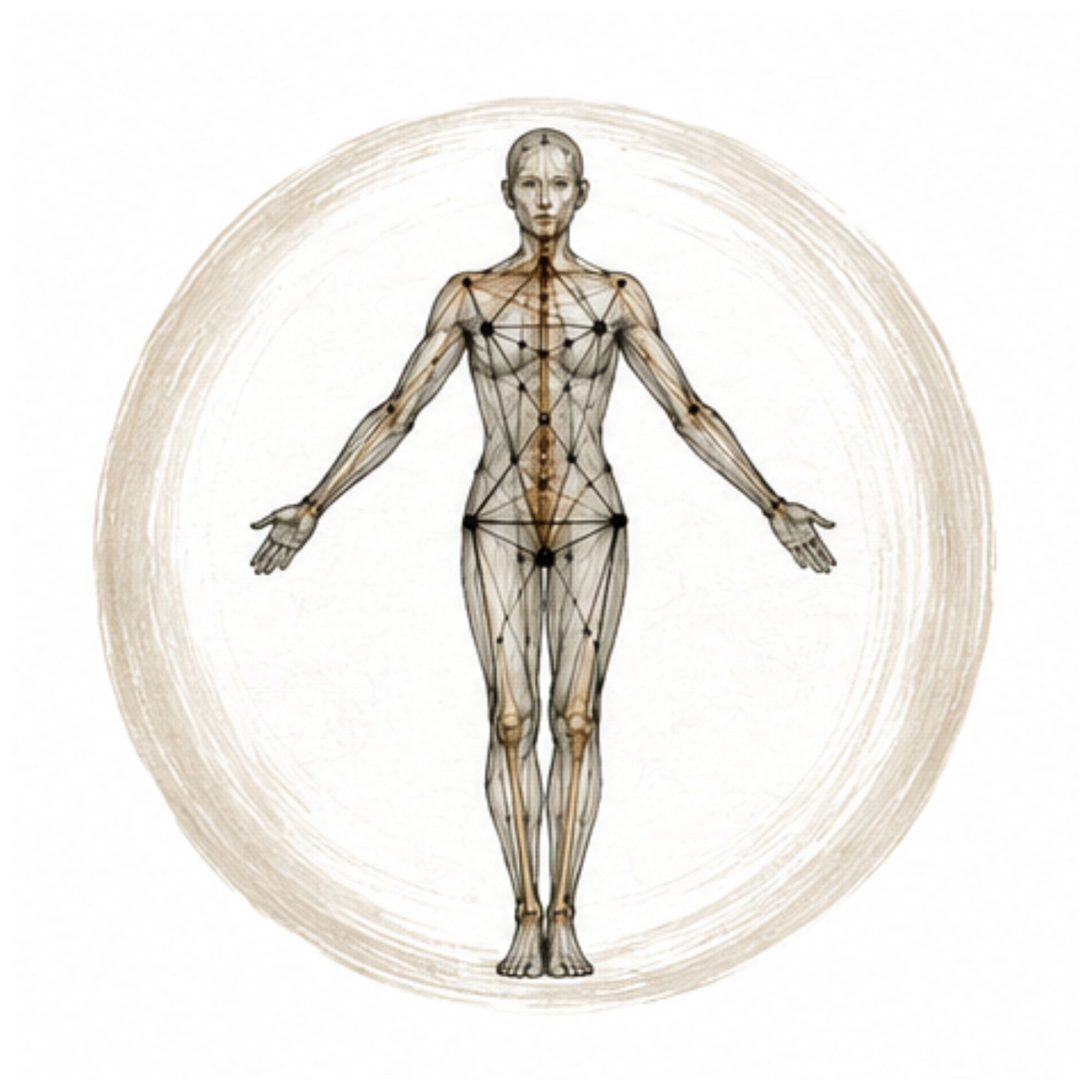
This interconnected view of the body extends beyond Kamaejutsu. Within Budojutsu Academy, it also forms an important principle in Active Balance, where the relationships between structure, tension and balance are approached from a different perspective.
In Kamaejutsu, we explore these relationships through movement: learning to recognise how change in one part of the body influences the whole, while maintaining balance, structure and freedom of movement.
A DIFFERENT VIEW OF KAMAE
Kamae is fundamental to many Japanese martial arts, but it is usually studied within the context of combat. A posture prepares the practitioner to attack, defend, receive movement or respond to an opponent while maintaining their own balance and influencing that of the other person.
Kamaejutsu changes the perspective. We remove the opponent and make our own kamae the subject of study. What happens to our structure when we enter a posture? Where does our weight move? What changes when we leave it again?
The posture is no longer simply a position from which a technique begins. It becomes a way of studying the body itself.
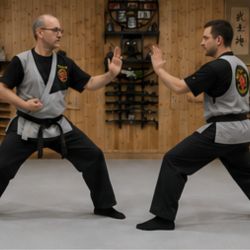
KAMAE IN MARTIAL PRACTICE
Purpose
A functional position within interaction.
Attention
Opponent, distance, opportunity and response.
Balance
Maintain your own structure while affecting another.
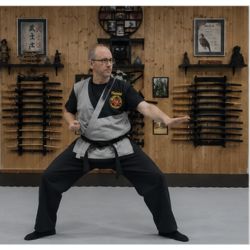
KAMAE IN KAMAEJUTSU
Purpose
A position through which movement can be explored.
Attention
Your own structure, centre, weight and awareness.
Balance
Understand how your balance changes as you move.
POSTURE
Posture gives the body structure. In Kamaejutsu, however, a kamae is never an isolated shape to be held. Its value lies in how the body enters it, organises itself within it and remains balanced as it prepares to move again.
The hips and legs provide the foundation, allowing the upper body to remain organised without becoming rigid.
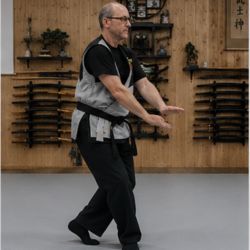
TIMING
Timing determines when that structure changes. Moving too early, too late or without allowing the body to organise itself can disturb balance and create unnecessary tension.
Through practice, transitions become increasingly deliberate: weight shifts, the centre moves and the next posture develops at the appropriate moment.
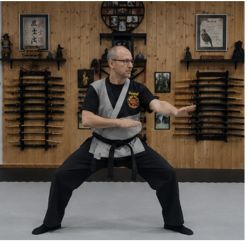
FLOW
Flow connects one movement to the next. Rather than stopping at each kamae, the body learns to move continuously while maintaining structure, direction and awareness.
Posture and timing begin to work together, allowing separate positions to develop into one connected sequence of movement.
PHYSICAL BALANCE
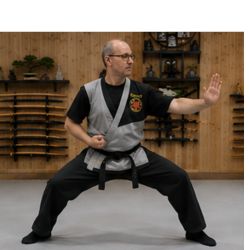
Physical balance begins with the way the body organises itself around its centre. In Kamaejutsu, we train the relationship between pelvis, hips, legs and ground so that movement can remain stable without becoming rigid.
As coordination improves, weight can shift more freely, transitions become smoother and unnecessary tension is reduced. Balance becomes something dynamic: the ability to adapt while remaining connected and controlled.
- Structure — Organise the body around a stable centre
- Coordination — Let hips, legs and upper body work together
- Mobility — Move without sacrificing control
MENTAL BALANCE
Mental balance develops through attention. Because Kamaejutsu is practised without the pressure of competition or confrontation, the practitioner can focus on breathing, timing, posture and the quality of each transition.
This concentration gradually creates more awareness of tension, distraction and unnecessary effort. The aim is not to empty the mind, but to become more present within the movement.
- Focus — Direct attention to the movement itself
- Awareness — Recognise tension and distraction
- Calm — Move with less unnecessary effort
BEYOND PHYSICAL BALANCE
As Kamaejutsu develops, balance becomes more than a physical quality. The practice gradually begins to include the relationship between movement, attention and state of mind.
At an advanced level, we introduce the Japanese concept of the Godai — the Five Elements: Earth, Water, Fire, Wind and Void. Each element offers a different perspective on how we organise, experience and express movement.
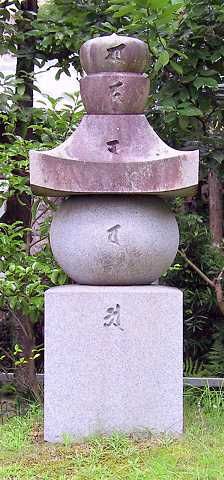
Through Godai Meiso, meditation is gradually integrated into the practice. The elements are not treated simply as symbols, but as different qualities to recognise through posture, breathing, movement and awareness.
This is not the starting point of Kamaejutsu. It is a later stage of the path, built upon the physical understanding of centre, balance, timing and flow developed through continued practice.
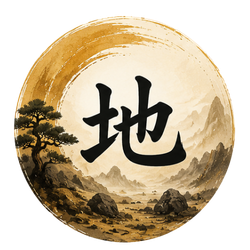
EARTH · CHI
Stability, structure and grounding. Earth develops the ability to recognise your foundation and remain organised as movement begins.
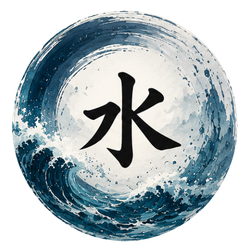
WATER · SUI
Adaptability, continuity and change. Water teaches us to adjust without losing connection, allowing movement to respond naturally to changing conditions.
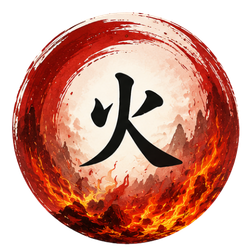
FIRE · KA
Energy, intention and direction. Fire explores how commitment and focused movement can transform a stable position into purposeful action.
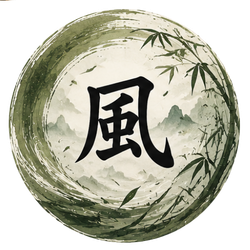
WIND · FŪ
Freedom, lightness and awareness. Wind develops movement that is less restricted, while maintaining control, structure and connection.
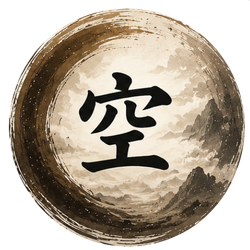
VOID · KŪ
Openness, awareness and integration. Void brings the previous elements together, allowing movement to arise without being confined to a single quality or response.
BALANCE IS NEVER STATIC
Kamaejutsu is not about reaching a perfect posture. Every kamae is temporary: a moment within movement, connected to what came before and what follows.
Through continued practice, posture, timing and flow become less separate. Physical balance, attention and awareness begin to work together, creating movement that is increasingly natural, adaptable and centred.
The art is therefore not found in holding a position, but in learning to remain balanced while everything changes.